

Micro Motor Blogs
N20 Motor vs. N10 Motor: Performance Comparison and Selection Guide for Smart Lock Applications
N20 Motor vs. N10 Motor: Performance Comparison and Selection Guide for Smart Lock Applications
Designing electromechanical deadbolts requires balancing strict spatial limitations against mechanical reliability. Hardware engineers facing tight mortise cavities often debate whether an n20 motor or its smaller counterpart can deliver the necessary actuation force without compromising battery longevity. Selecting the wrong actuator leads to premature gear stripping, high current spikes during stall conditions, or failure to retract heavy-duty deadbolts under side-load pressure. This technical guide evaluates the mechanical properties, power consumption profiles, and physical dimensions of these miniature actuators to streamline hardware integration for smart lock applications.
Understanding the Contenders: N20 vs. N10
What is an N10 Motor?
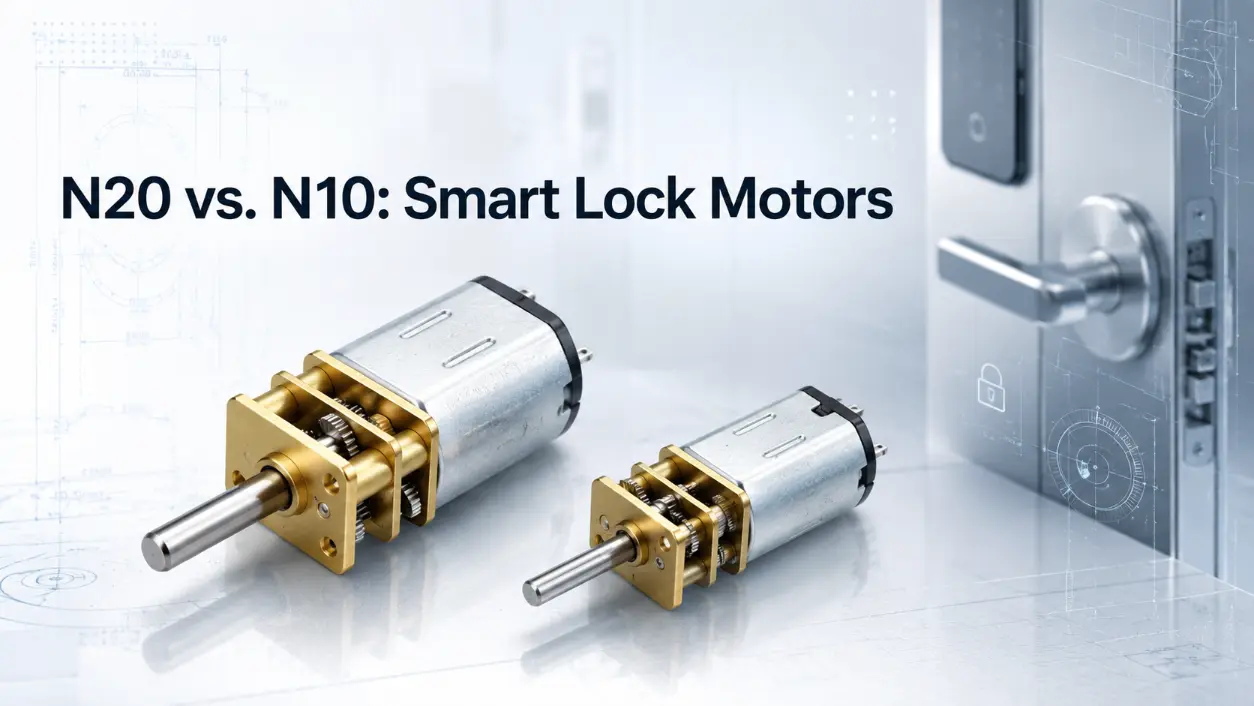
The n10 motor is a micro direct‑current actuator with a compact rectangular footprint, typically measuring approximately 8 mm × 10 mm × 12 mm (or equivalent cylindrical variants). Its internal armature uses fine‑gauge windings to fit within minimal housings, but the reduced magnetic volume inherently limits flux density compared with larger frames. Although gearbox versions are available (often with low‑ratio reductions), many configurations rely on direct output for simplicity.
In automated latching assemblies, this footprint suits lightweight indoor privacy locks, cabinet latches, or magnetic catches where continuous torque demands remain low. However, its lower thermal mass means sustained operation under heavy mechanical resistance will rapidly elevate winding temperatures, demanding careful duty‑cycle management in firmware.
What is an N20 Motor?
By contrast, the n20 motor features a larger standardized cross‑section of approximately 10 mm × 12 mm combined with a longer body (about 15 mm in length), allowing for higher copper fill and stronger magnetic fields. More importantly, this actuator is almost universally paired with precision metal gearboxes—either spur or planetary—to multiply output torque while reducing rotational speed.
For commercial‑grade automated deadbolts, this configuration handles the friction of multi‑point locking systems and spring‑loaded strikes. The extended gear train options enable mechanical designers to tailor output velocities and torque to meet strict acoustic and tactile requirements.
Head‑to‑Head Performance Comparison
Size and Form Factor
Space allocation inside a modern residential deadbolt mortise is heavily contested by circuit boards, battery packs, and mechanical linkages. The physical disparity between these two actuators directly dictates interior housing geometry.
| Parameter | N10 Actuator | N20 Actuator |
|---|---|---|
| Typical Dimensions (approx.) | 8 mm × 10 mm × 12 mm (or Φ12 × 10 × 12.1 mm) | 10 mm × 12 mm × 15 mm |
| Gearbox Integration | Available (low‑ratio options) / direct drive common | Standard spur or planetary gearboxes |
| Nominal Voltage Range | 3 V to 7 V (custom variants up to 12 V) | 3 V to 12 V (custom up to 24 V) |
While the N10 saves roughly 3–4 mm in linear depth compared to the N20, it offers fewer integrated mounting points and lower structural rigidity. Engineers must account for these mounting differences when designing injection‑molded chassis components to prevent motor shifting under high operational torque.
Torque and Power Output
Torque transmission is the primary engineering bottleneck when a deadbolt encounters binding or misaligned strike plates. An unassisted direct‑drive miniature architecture struggles to overcome static friction when a door warps under extreme weather conditions.
Integrating a small gear motor resolves this limitation by trading rotational speed for mechanical advantage. While an N10 setup (even with a gearbox) typically delivers a stall torque around 6 g·cm in its bare form—and moderately higher with reduction—an N20 paired with a high‑ratio gearbox can produce stall torques ranging from 0.5 kgf·cm to over 5 kgf·cm, converting modest electromagnetic force into substantial linear push‑pull capability. This prevents motor stall events that drain battery reserves.
Power Consumption and Battery Life
Smart lock hardware relies on strict power budgets, running on multi‑cell alkaline or lithium battery packs for months or years. Current draw during a lock cycle directly dictates lifespan.
When evaluating small brushed dc motor options, engineers look closely at stall current (Istall). The N10 typically draws a stall current of about 1.05 A at 7.4 V, while the N20’s stall current varies widely with winding and gear ratio—commonly between 0.5 A and 1.2 A at nominal voltages. Although the N10 appears efficient at light loads, if it stalls against a misaligned strike plate, prolonged high‑current draw without movement will trigger thermal overload or trip protection circuits. Conversely, an optimized N20 completes the transit cycle faster under load, reducing overall active‑state millijoules per operation despite a slightly higher running current.
Selecting the Right Motor for Smart Lock Design
When to Choose the N10 Motor
- Light‑duty mechanisms: Ideal for magnetic catches, push‑to‑open latches, or indoor privacy locks that require minimal transit force.
- Space‑critical interiors: Suitable for narrow aluminum frames, sliding pocket doors, or glass doors where mortise depth is extremely restricted.
- Aesthetic‐driven designs: Allows industrial designers to reduce escutcheon thickness without interfering with core linkages.
When to Choose the N20 Motor
- Commercial and high‑security deadbolts: Provides the torque needed to overcome weather seals, side‑load friction, and heavy bolt mechanisms—though specific ANSI/BHMA ratings require confirmed test data.
- Multi‑point locking systems: Delivers consistent rotational force to drive complex cam linkages and vertical rods simultaneously.
- Durable mechanical cycling: Utilising robust small brushed motors with hardened steel gears ensures thousands of maintenance‑free cycles under heavy daily usage.
Manufacturing and Sourcing Considerations
Procuring miniature actuators for high‑volume consumer hardware requires rigorous vendor qualification. When sourcing a small 12v motor or lower‑voltage variants from global suppliers, engineering teams must mandate strict environmental and electrical testing protocols.
Brush wear, commutation noise, and commutator oxidation are common failure modes in humid environments. Quality assurance procedures should incorporate automated life‑cycle testing under simulated load conditions, measuring back‑EMF consistency and gearbox backlash tolerances over extended operational periods. Ensuring consistent magnet grade and armature balancing prevents excessive acoustic resonance, which degrades the premium user experience expected from modern electronic access control hardware.
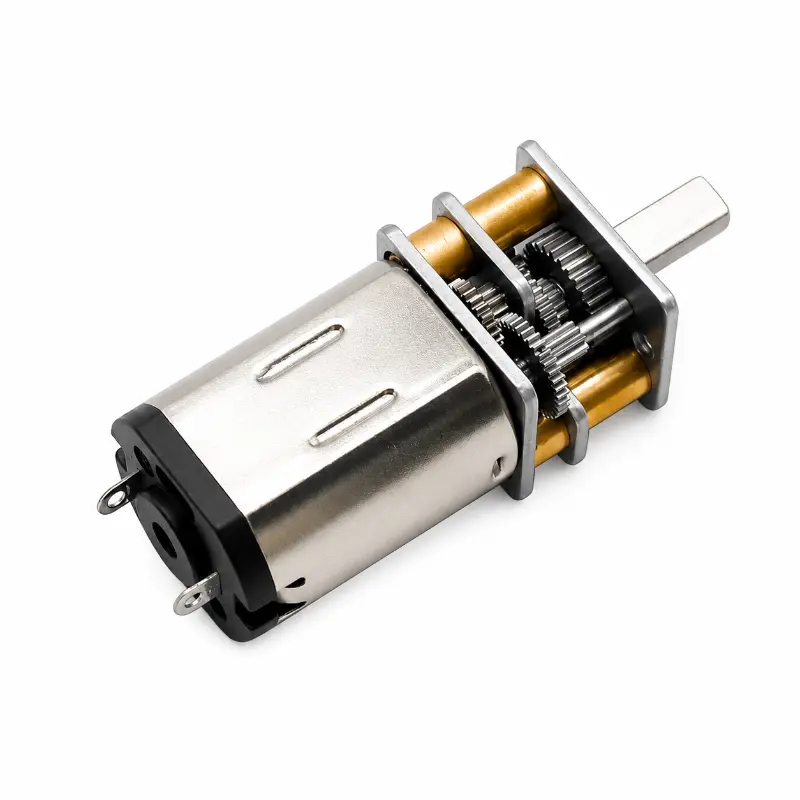
KC-N20 Miniature Gear Motor
12mm N20 Series · 3V DC & 12V DC Options
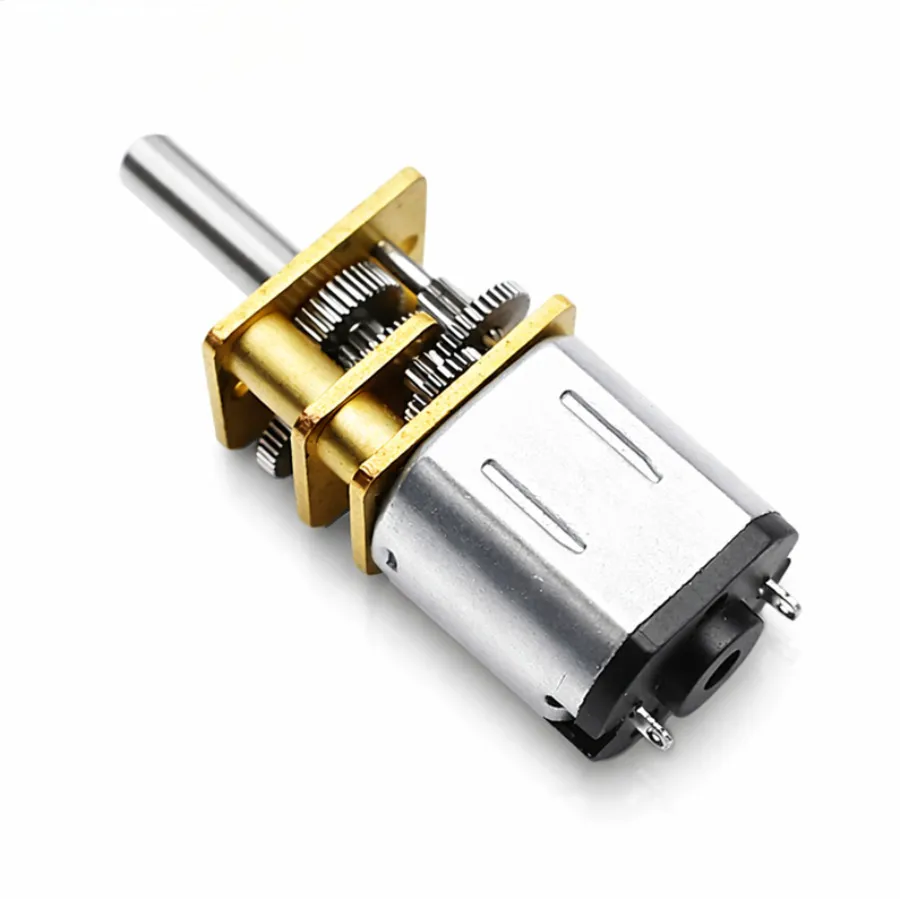
KC-GM12-N10VA Micro DC Gear Motor
12mm N10 Series · 1.5V–12V Wide Voltage Range
Conclusion
Selecting between these miniature actuators requires balancing physical size, available gearbox options, and required mechanical torque. For most deadbolt applications, the n20 motor—with its wider voltage range, higher torque capability, and robust gearbox integration—offers a more reliable solution, whereas the N10 remains suitable for low‑force, space‑constrained designs.
Frequently Asked Questions (FAQ)
1. Can an N10 actuator replace an N20 variant to save space in an existing deadbolt design?
Direct substitution is rarely feasible without significant mechanical redesign. The N10 lacks the structural gearbox integration and output torque required for standard deadbolt friction, which often leads to immediate motor stall and thermal overload during operation.
2. How do brushed miniature actuators handle long‑term wear in battery‑operated security devices?
Standard carbon or precious‑metal brushes experience gradual mechanical wear over thousands of cycles. Selecting actuators with high‑grade commutator materials and proper lubrication prevents premature debris accumulation and electrical contact failure.
Performance Comparison: N10 vs N20
Key metrics derived from manufacturer specifications