

Micro Motor Blogs
Maximizing Efficiency with a High Speed DC Motor in Modern Automation
1. Introduction
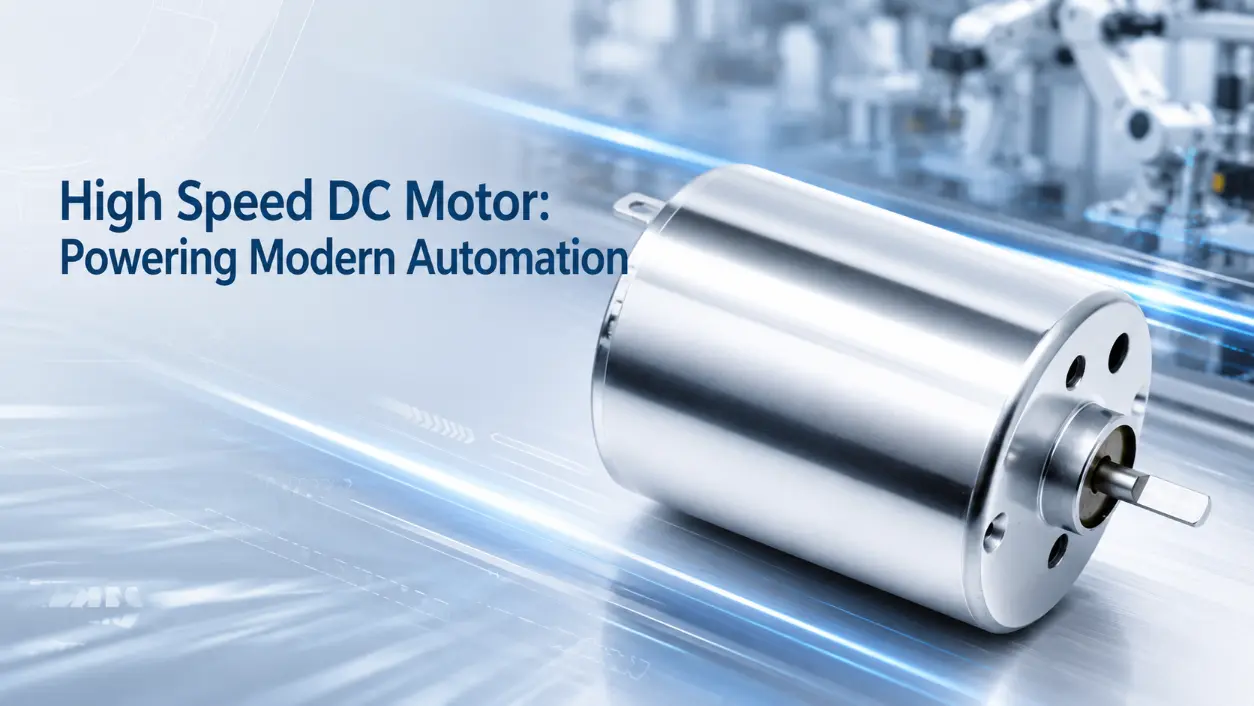
Modern industrial automation infrastructure relies heavily on precise motion control to maintain high operational throughput and minimal cycle variance. Within automated assembly lines, high-speed sorting mechanisms, and dynamic optical inspection stages, selecting the correct actuator dictates overall system reliability. A high speed dc motor serves as a core driver in these dynamic environments, translating electrical inputs into rapid, controlled mechanical rotation. As manufacturing systems demand higher operational tempos, understanding the dynamic response time, rotor inertia limits, and thermal performance of a high speed dc motor becomes essential for design engineers and system integrators aiming to eliminate bottlenecks in automated workflows.
2. Technical Performance Factors in Industrial Motion
Evaluating the operational viability of any motion system requires a rigorous examination of internal mechanical parameters. When deploying a high rpm dc motor, engineers must account for rotor inertia, dynamic balancing tolerances, and thermal dissipation under continuous high-frequency duty cycles.
Rotor inertia directly affects acceleration and deceleration rates. In pick-and-place electronic component placement machines, where components are positioned within milliseconds, minimizing rotor mass reduces transient settling time and increases overall cycle efficiency. Dynamic balancing is another critical factor; mechanical unbalance at high rotational velocities induces harmonic vibrations that degrade bearing longevity and compromise optical feedback encoders. Furthermore, thermal management must be addressed. Continuous high-load operation generates copper and iron losses, requiring optimized thermal paths to prevent armature winding degradation and subsequent insulation failure.
A structural comparison between mechanical commutation architectures reveals distinct operational profiles. For instance, selecting a high speed brushed motor provides a cost‑effective framework for applications with moderate duty cycles where brush wear can be managed through scheduled maintenance. Conversely, electronic commutation alternatives eliminate mechanical friction points but introduce complex inverter drive requirements and higher initial costs. When system requirements dictate a fast dc motor response for rapid valve actuation or tension control in textile winding machinery, evaluating the trade‑off between thermal limits and torque constant (Kt) is critical for maintaining long‑term system stability.
Below is a comparison table outlining key performance parameters for industrial motion components:
| Parameter | Brushed DC | Brushless DC (BLDC) |
|---|---|---|
| Commutation | Mechanical (brushes) | Electronic (inverter) |
| Maintenance | Periodic brush replacement | Virtually maintenance‑free |
| Speed range | Moderate to high | Very high (limited by bearings) |
| Typical lifespan | 1,000–3,000 hr (brush‑dependent) | >10,000 hr |
| Control complexity | Simple (open‑loop possible) | Requires closed‑loop with Hall/encoder |
3. Voltage Specifications and Application Deployment
Matching electrical inputs to specific mechanical loads ensures long‑term operational stability across diverse automation cells. Voltage scaling dictates current draw, torque generation curves, and available speed headroom within tightly integrated machine layouts.
In space‑limited precision instruments such as portable medical diagnostic analyzers or handheld optical inspection tools, a high rpm 12v dc motor provides the necessary rotational speed while maintaining a compact footprint and manageable heat dissipation. For example, in laboratory micro‑centrifuges or small peristaltic pumps used in fluid handling, these low‑voltage motors enable rapid, repeatable motion without imposing excessive thermal loads on adjacent sensitive electronics. Similarly, a high speed mini dc motor is often found in miniature actuator modules for robotic end‑effectors, where its small diameter and low rotor inertia allow swift positioning within confined assembly cells.
Conversely, heavier industrial applications—such as conveyor belt diverters, automated palletising grippers, and mobile robotic platforms—benefit from the higher power density of a 24v high speed dc motor. These motors drive auxiliary feed rollers in packaging lines, synchronise with main conveyor speeds, and provide reliable torque for automated guided vehicle (AGV) wheel drives under varying floor conditions. In such environments, the 24 V bus is widely available and delivers a balanced compromise between electrical safety and power output, ensuring stable operation even during momentary overloads.
4. Engineering Partnership and Custom Sourcing
Integrating high‑velocity actuators into proprietary industrial machinery requires close collaboration with specialised small electric motor manufacturers. Off‑the‑shelf components frequently fail to meet exact spatial, electrical, or thermal constraints, necessitating tailored engineering adjustments.
Engaging an experienced original equipment manufacturer (OEM) and original design manufacturer (ODM) partner ensures that custom shaft dimensions, specialised winding configurations, and dedicated mounting interfaces align precisely with system integration drawings. Direct factory sourcing further guarantees strict batch consistency, complete material traceability, and comprehensive technical data sheet verification. By partnering directly with manufacturers operating under certified quality management systems like ISO 9001 and ISO 13485, engineering teams eliminate supply chain uncertainties and secure reliable components built for demanding industrial duty cycles.
5. Conclusion and Technical FAQ
Optimal selection and integration of a high speed dc motor directly determine the operational reliability and mechanical throughput of modern automated machinery. Sound engineering practices—grounded in accurate performance data, realistic voltage selection, and trusted sourcing—are the foundation of successful motion system design.
Frequently Asked Questions
Unbalanced rotors generate high‑frequency centrifugal forces that translate into structural vibration. In applications like optical inspection turntables, these vibrations cause micro‑deflections in feedback encoders, leading to positioning errors and premature bearing wear. Precision balancing (typically to ISO 1940 Grade G 2.5) is mandatory to ensure smooth continuous operation.
High rotational speed combined with continuous electrical commutation accelerates brush wear and thermal accumulation at the commutator‑brush interface. If thermal dissipation is inadequate, elevated temperatures cause thermal expansion of the armature assembly, degrading insulation integrity and eventually leading to premature winding failure. Active cooling or derating is often required for sustained high‑speed duty.
Industrial automation demands exact specification compliance, material traceability, and batch‑to‑batch repeatability. Direct sourcing from qualified manufacturers ensures access to complete engineering datasheets, custom winding modifications, and rigorous quality controls adhering to ISO 9001 standards—capabilities that standard retail distribution channels typically cannot provide.