

Micro Motor Blogs
Upgrading Personal Care Products: Thermal Management and Torque Balancing for N30 and 180 Motors
Engineering Challenges in Modern Personal Care Device Design
Designing modern personal care hardware demands balancing strict physical volume constraints with escalating mechanical performance expectations. Handheld grooming equipment, such as professional multi-attachment hair trimmers and heavy-duty epilators, requires continuous high-load operation inside closed plastic housings. Selecting a reliable 180 motor dictates the baseline mechanical output, but it also introduces severe thermal accumulation and vibration challenges. Engineers must optimize heat dissipation paths and manage load torque spikes without expanding the outer envelope of the handle. Achieving operational longevity under repetitive mechanical stress requires careful coordination between magnetic flux density, brush composition, and internal thermal conductivity.
Actuator Selection: Evaluating N30 versus 180 Motor Architectures
The selection of direct current actuators governs the efficiency limits of handheld personal care appliances. When designing small-form-factor devices, engineers typically evaluate two primary fractional horsepower formats: the micro‑scale N30 DC motor and the larger DC 180 motor.
The N30 DC motor operates efficiently in ultra‑constrained spaces. It is typically deployed in electric facial cleansing brushes, micro‑trimmers, and precision dental scalers where physical volume is under ten cubic centimeters. Its lower armature mass minimizes startup inertia, allowing for rapid frequency modulation in acoustic toothbrushes. However, its continuous torque threshold is relatively modest, with typical values depending on winding configuration and operating voltage.
Conversely, applications requiring persistent cutting force—such as professional hair clippers or multi‑head shavers—necessitate a higher torque profile. Integrating a DC 180 motor provides the necessary mechanical advantage. With an expanded armature diameter and a heavier gauge winding, this actuator delivers higher stall torque, allowing it to maintain stable rotational speeds even when encountering dense hair bundles or high‑viscosity cosmetic formulations.
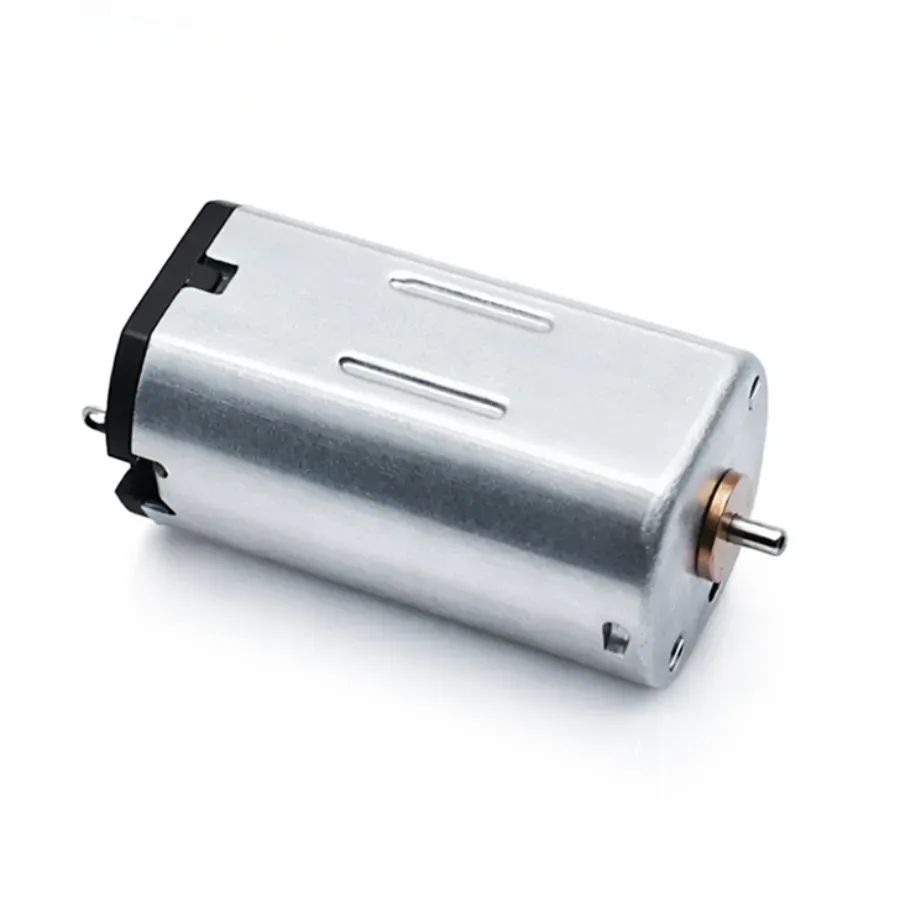
KC‑N30 Micro DC Motor
- Voltage: 3.0 V, 5.0 V, 12.0 V
- No‑load Speed: 5,100 – 16,200 rpm
- Stall Torque: 7.7 – 29 g·cm
- Output Power: Up to 1.08 W
Optimized for precision medical instruments, dental equipment, smart locks, electric toothbrushes, and camera lens actuators.
The performance characteristics of these two actuator classes differ significantly across electrical and mechanical parameters. The following table summarizes typical values for common variants. Note: All numerical data are representative examples; actual specifications vary by manufacturer and model. Engineers must consult the official datasheet for the specific motor selected.
| Parameter | N30 DC Motor (Typical) | DC 180 Motor (Typical) |
|---|---|---|
| Body Diameter | 12 mm | 20.4 mm |
| Body Length (excluding shaft) | ~20 mm | ~32 mm |
| Voltage Range (common variants) | 1.5 – 24 V DC | 3.0 – 12 V DC |
| No‑Load Speed (at rated voltage) | 5,000 – 30,000 RPM | 5,000 – 18,000 RPM |
| Stall Torque (bare motor, typical) | 1.5 – 3.5 mN·m | 8.0 – 22.0 mN·m |
| Primary Application | Precision facial tools, micro‑actuators | Hair clippers, epilators, shavers |
Thermal Management in Handheld Enclosures
Managing thermal energy inside sealed plastic enclosures represents a critical engineering hurdle. Because modern personal care tools rely on ABS or polycarbonate housings to maintain chemical resistance and aesthetic appeal, internal heat dissipation is severely restricted. When a 180 motor operates continuously under a heavy mechanical load, electrical resistance within the copper windings converts a substantial portion of input electrical energy into thermal energy (I2R losses).
If internal temperatures exceed thermal thresholds, permanent magnets—such as NdFeB or ferrite materials—can undergo thermal demagnetization. For NdFeB magnets, irreversible flux loss typically begins above 150 °C; ferrite magnets have higher intrinsic coercivity but still suffer from reduced output at elevated temperatures. This degradation permanently reduces motor efficiency and torque output. Furthermore, excessive heat accelerates commutator wear and carbon brush oxidation, shortening the operational lifecycle of the device.
To mitigate these thermal risks, hardware designers employ multi‑layered cooling methodologies. First, internal airflow channels are strategically modeled using computational fluid dynamics (CFD) to direct convective air currents away from the rotor core toward targeted exhaust vents. Second, thermal conductivity is improved by replacing standard plastic motor mounts with aluminum‑alloy or zinc‑die‑cast brackets. These metal brackets function as passive heat sinks, absorbing thermal energy from the motor casing and distributing it evenly across the device frame. Additionally, defining precise duty cycles—such as a 15‑minute operational limit followed by a cooling interval—prevents thermal runaway in high‑power grooming tools without sacrificing user experience.
Torque Balancing and Mechanical Stability
Maintaining mechanical stability in handheld personal care tools requires accounting for variable resistance profiles. Unlike industrial environments with constant loads, consumer grooming appliances encounter dynamic loads dictated by user behavior, hair density variations, and cosmetic fluid viscosities. For instance, when a hair clipper encounters a dense clump of wet hair, the sudden mechanical resistance threatens to stall the armature.
To prevent stall conditions, engineers integrate optimized planetary or spur gearboxes with the 180 motor. Gear reduction multiplies output torque while stabilizing rotational speed, ensuring consistent cutting velocity regardless of hair thickness. However, introducing gears also increases mechanical complexity and vibration transmission to the user’s hand.
Vibration control is directly tied to armature balancing. Unbalanced armatures generate high‑frequency oscillations that cause hand fatigue, increased acoustic noise, and premature bearing failure. Precision dynamic balancing, achieved by drilling micro‑cavities into the rotor lamination stacks or utilizing automated balancing machines, reduces residual unbalance to acceptable operational tolerances—typically below 0.5 g·mm for consumer‑grade actuators. Additionally, employing elastomeric dampening rings around the motor housing isolates high‑frequency vibrations from the outer plastic casing, ensuring a comfortable, low‑vibration user experience.
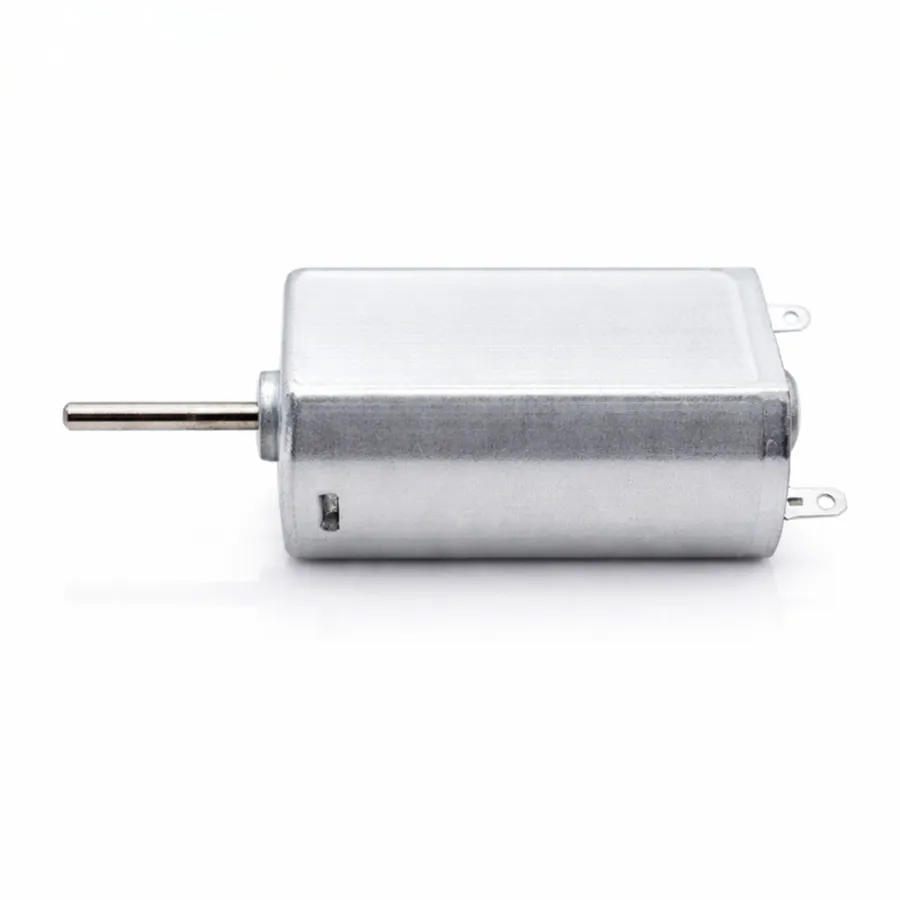
KC‑180SH High‑Performance DC Motor
- Voltage: 3.0 V, 12.0 V, 24.0 V
- No‑load Speed: 6,100 – 15,000 rpm
- Stall Torque: 90.4 – 270 g·cm
- Output Power: Up to 5.7 W
Ideal for electric shavers, personal care devices, blood pressure monitors, aircraft models, and automotive mirror adjusters.
Economic Viability and Sourcing Metrics
Balancing technical performance with financial viability is mandatory for scalable mass production. When evaluating component expenditures, procurement managers must look beyond the initial 180 motor price to calculate total cost of ownership, assembly line scrap rates, and field failure probabilities.
Although low‑cost sourcing options may seem attractive initially, they often introduce severe supply chain risks, including inconsistent magnetic flux, poor commutator concentricity, and wide variance in electrical resistance. These manufacturing defects lead to high failure rates during automated assembly or early product burnout in the field. Consequently, collaborating with certified motor manufacturers who implement strict statistical process control (SPC) ensures component uniformity. Sourcing verified batches minimizes line stoppages and reduces long‑term operational expenditures, balancing high‑performance technical requirements with predictable manufacturing costs.
Conclusion
Effective thermal management and precise torque balancing remain foundational pillars of robust personal care device engineering. The N30 and 180 motor platforms offer distinct advantages depending on the application: the N30 excels in space‑constrained, low‑inertia precision tools, while the 180 series provides the higher torque density required for demanding grooming tasks. However, all performance specifications—including dimensions, torque, speed, and voltage—must be verified against the manufacturer’s official datasheet for the specific motor variant. Generic parameter ranges are insufficient for engineering‑grade design decisions.
Frequently Asked Technical Questions
High ambient temperatures inside sealed plastic handles elevate the electrical resistance of the copper windings. As resistance increases, drawing the same mechanical output requires higher current, accelerating thermal generation and risking premature brush degradation. This positive feedback loop can lead to rapid temperature rise if not mitigated by thermal management strategies.